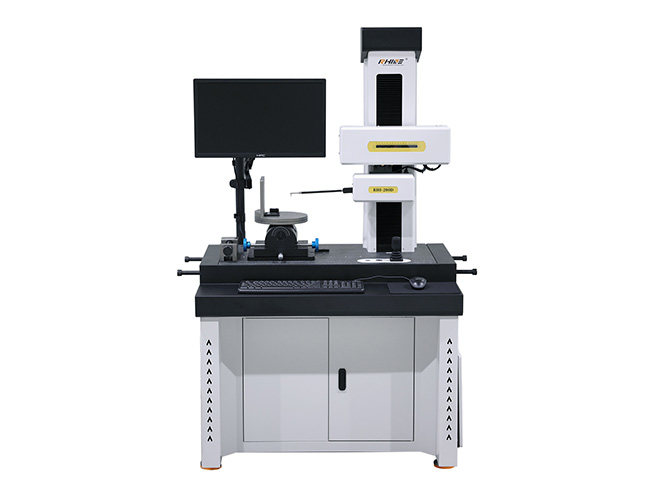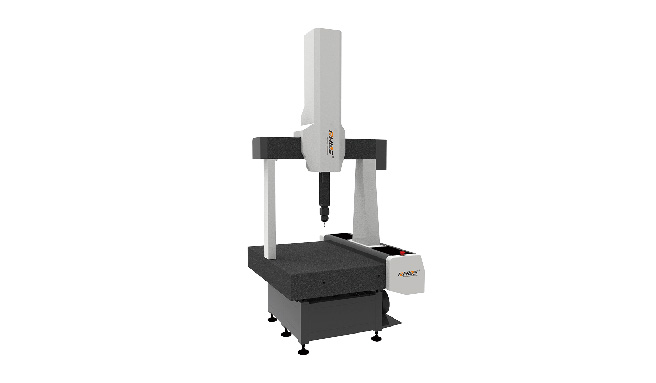
I. Introduction: The "Probe" Controversy in Industrial Measurement
In the modern quality control system of manufacturing industries, the Coordinate Measuring Machine (CMM) is hailed as the "industrial inspection center" and the "universal measuring machine", capable of precisely measuring over 95% of geometric parameters. And as the "tentacles" of the CMM - the probe system - it is the key factor determining the measurement accuracy and efficiency.
For a long time, the high-end trigger-type measuring probe market has been monopolized by imported brands such as Renishaw. The TP20 series products have become the industry benchmark. However, with the launch of the CF20 trigger-type measuring probe series independently developed by Shenzhen Lihuo Precision Equipment Technology Co., Ltd., this situation is being broken. CF20 not only achieves complete interchangeability with TP20, but also, with its independent intellectual property rights and localized service advantages, has become an important breakthrough in the domestic precision measurement field.
II. Product Overview: Modular Design Precision Trigger System
The CF20 trigger-type probe is a 5-direction or 6-direction contact-trigger type probe. It adopts an innovative separate design of the upper and lower modules, consisting of the probe body (upper module) and the probe suction cup (lower module). The core advantage of this design lies in:
-
Plug-and-play:Supports manual or automatic replacement of the probe, without the need for re-calibration, significantly reducing the preparation time for measurements.
-
High compatibility:It can be interchanged with Renishaw TP20 probe and is compatible with Renishaw CZ10M/CZ10T indexing measuring heads as well as Renishaw PH10M/PH10T measuring heads.
-
Special version:Provide the magnetic-sensitive CF20-N, specially designed for users who use automatic needle-changing racks.
III. Core Technical Parameters and Performance Indicators
Force measurement selection
The CF20 module offers four different force measurement specifications, suitable for various measurement scenarios:
-
Micro-force measurement:Suitable for thin-walled parts, elastic bodies and other easily deformed workpieces
-
Medium force measurement:General-purpose measurement
-
Standard force measurement:Conventional industrial applications
-
High measurement force:Heavy-duty measuring pins or deep-hole measurement
IV. In-depth Analysis of Technical Features
Trigger mechanism
CF20 employs the mechanical contact triggering principle:When the probe comes into contact with the measured workpiece, the contact force is balanced by the precise spring system inside the probe. The probe undergoes a slight deflection around its internal pivot point, causing a change in the on-off state of the contact mechanism. When the resistance change reaches the trigger threshold, a trigger signal is immediately sent out.
Although this traditional mechanical design may seem simple (a combination of contact switches, springs and steel balls), its engineering complexity is extremely high - it is necessary to ensure that after 100,000 or even 1,000,000 trigger operations, the spring's elastic coefficient and the contact resistance of the contacts can still remain within the strict tolerance range. This is precisely the technical barrier that domestic probes have long struggled to overcome. Through more than five years of commercial verification, Lehe Precision has proved that the reliability of CF20 has reached the industrial standard.
2. Collaboration with Automatic Seat Detection System
When used in conjunction with the CZ10T-S indexing automatic fixture measuring system, the CF20 can achieve true 5-axis measurement capabilities:
-
Axis A (Pitch):0° to 105°, with 7.5° graduation, totaling 15 positions
-
B-axis (yaw):±180°, 7.5° graduation, a total of 48 positions
-
Spatial positioning point:720 repeatable positioning positions
-
Rotate 90 degrees in time:3.5S
-
Operating speed:5r/min
This configuration enables the CMM to approach the workpiece features from any angle in space, without the need for multiple clamping operations, significantly enhancing the detection efficiency for complex parts.
3. Measuring needle replacement system
The split design of CF20 enables automatic needle swapping (requires a needle changing frame). Under program control, it can automatically select different lengths and diameters of measuring needles to form combinations, achieving an automated inspection process of "one-time clamping, full feature measurement".